
Skin Checks and Diagnosis
Assessment of concerning spots and skin changes, with further investigation where appropriate.
Skin cancer care in Perth
Skin checks, diagnosis, surgery, and reconstruction in Perth.
Whether you have noticed a changing spot, received a diagnosis, or need advice about treatment, understanding your next step matters.
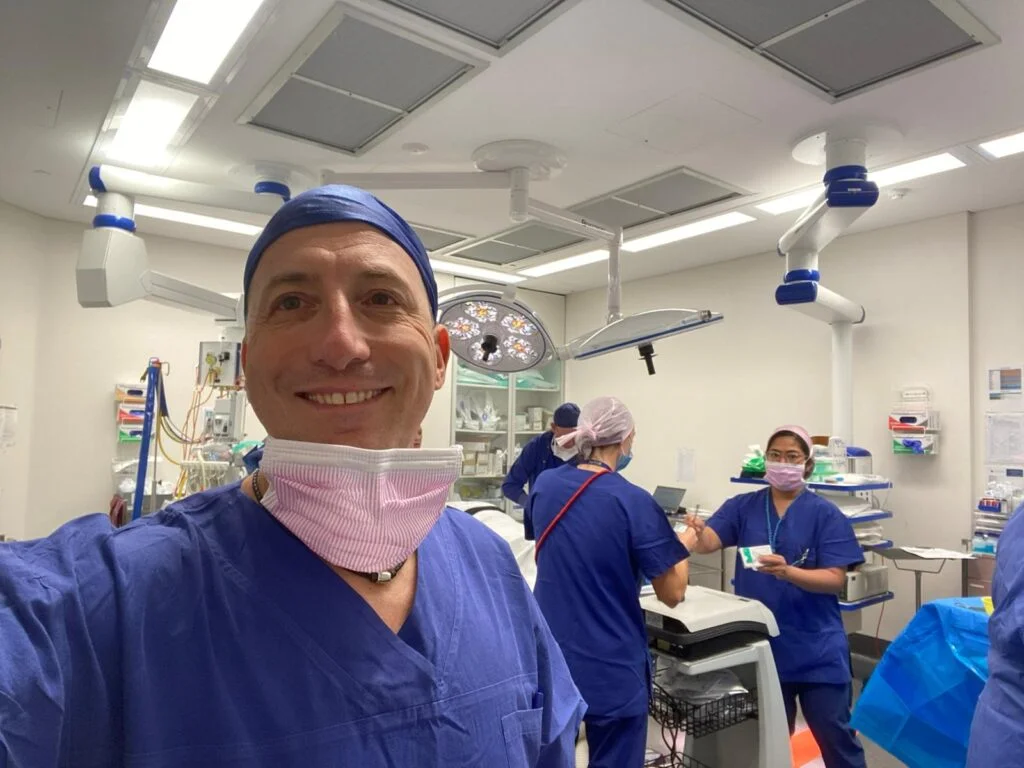
Dr Shaun Segal provides personalised skin cancer care, helping patients make informed decisions from their first consultation through treatment and follow-up.
A considered next step
Personalised discussion, clear information, and thoughtful care.
Meet Dr Shaun Segal
Dr Shaun Segal holds a fellowship in skin cancer surgery from the Australian College of Cutaneous Oncology (ACCO). His practice focuses on skin cancer diagnosis, surgical treatment, and reconstruction.
About Dr SegalA clear path through care
Assessment of concerning spots and skin changes, with further investigation where appropriate.
An individual treatment plan that considers your diagnosis, the affected area, and your health.
Discussion of repair options when reconstruction is needed after removal.
Guidance on recovery, wound care, and ongoing monitoring.
Your appointment
Discuss your concerns and relevant medical history.
Have the affected area examined.
Understand the findings and any recommended investigations.
Discuss treatment options and follow-up arrangements.
Skin health is an important part of overall wellbeing, and recognising changes in the skin should never be overlooked. From a new or changing spot to a lesion that requires further investigation, seeking an appropriate medical assessment can help patients understand their condition and make informed decisions about treatment. Dr Shaun Segal focuses on skin cancer diagnosis, surgical treatment and reconstruction, with an approach that considers both medical needs and the functional and cosmetic aspects of treatment.
Finding the right medical professional for skin cancer care can feel challenging, particularly when a suspected cancer affects a visible or sensitive area such as the face, nose, ears or eyelids. Understanding the available treatment options, the importance of accurate diagnosis and the role of follow-up care can make the process easier to navigate.
For people seeking information about a Skin Cancer Doctor in Australia, it is important to look for relevant clinical experience, appropriate qualifications and a clear explanation of the recommended treatment. Individual care should be based on the patient’s diagnosis, medical history, the location of the lesion and the findings of any necessary investigations.
Dr Shaun Segal is associated with specialised skin cancer surgery, including the assessment and surgical management of skin cancers and reconstruction following removal. His practice information describes a focus on managing lesions that may require careful surgical planning, particularly when cancer affects cosmetically or functionally sensitive areas.
Skin cancer treatment involves more than removing a visible spot. A suitable treatment plan may require a clinical examination, assessment of the lesion, a biopsy or other diagnostic investigation, surgical removal and review of the pathology results. Some patients may also require reconstruction or ongoing monitoring, depending on the type of skin cancer and the outcome of treatment.
When researching Dr Shaun Segal, patients should review his verified professional profile, qualifications, areas of special interest and current consulting locations. These details can help patients understand whether the services offered are appropriate for their individual needs.
Skin cancer care involves the assessment, diagnosis, treatment and follow-up of potentially cancerous changes in the skin. Australia has a significant burden of skin cancer, making sun protection, awareness of skin changes and timely medical assessment important aspects of skin health.
Skin cancer can develop in different areas of the body, including the face, scalp, ears, neck, arms, hands, back and legs. It does not always appear as a dark mole. Some lesions may look like a persistent sore, a rough or scaly patch, a raised growth or a spot that repeatedly bleeds or fails to heal.
Effective Skin Cancer Care begins with understanding the patient’s concerns and determining whether a lesion requires further investigation. Depending on the clinical findings, a doctor may recommend observation, a biopsy, surgical removal or referral for additional specialist management.
Not every unusual skin mark is cancerous, and appearance alone cannot establish a diagnosis. A qualified medical professional can assess concerning changes and explain the appropriate next steps.
Changes in the skin can occur for many reasons, but certain developments deserve medical attention. A new spot, a mole that changes in size or colour, a lesion with an irregular appearance or a sore that does not heal should be assessed rather than ignored.
Some warning signs include:
These signs do not automatically mean that a person has skin cancer. However, they can indicate the need for a professional assessment. Anyone concerned about a changing or suspicious lesion should arrange medical advice promptly instead of relying solely on online photographs or self-diagnosis.
Regular skin examinations may be particularly important for people with a history of skin cancer, significant sun exposure, a family history of melanoma or other recognised risk factors. The appropriate frequency of examinations depends on individual circumstances and medical advice.
Understanding the main types of skin cancer can help patients follow discussions about diagnosis and treatment.
Basal cell carcinoma, commonly called BCC, is a type of skin cancer that often develops on sun-exposed areas. It may appear as a pearly bump, a persistent sore, a pink patch or a lesion that bleeds and heals repeatedly.
Although BCC rarely spreads to distant parts of the body, it can grow into surrounding tissue if left untreated. Lesions affecting the nose, eyelids, ears and other sensitive areas may require careful treatment planning to remove the cancer while preserving function and appearance.
Squamous cell carcinoma, or SCC, can appear as a scaly patch, a firm lump, a crusted lesion or a sore that does not heal. It commonly occurs on areas exposed to sunlight, although it can develop elsewhere.
Some SCCs can grow into deeper tissues and spread to other parts of the body. Prompt assessment and appropriate treatment are important, particularly when a lesion is growing, painful, bleeding or changing.
Melanoma develops from pigment-producing cells in the skin. It may appear as a new mole or a change in an existing mole. Features such as asymmetry, irregular borders, variations in colour, increasing size or noticeable evolution may raise concern.
Melanoma requires appropriate assessment because its behaviour and treatment depend on factors including the tumour’s characteristics and stage. A suspicious lesion should be evaluated by a medical professional without unnecessary delay.
The treatment recommended for any skin cancer depends on the confirmed diagnosis, the lesion’s characteristics, its location and the patient’s overall health.
Accurate diagnosis is an essential part of appropriate skin cancer management. During an assessment, a doctor may ask about the history of a lesion, changes in its appearance, previous skin cancers, sun exposure and other relevant medical factors.
A clinical examination may include dermoscopy, which uses a specialised magnifying instrument to examine structures within the skin. This can help a clinician assess whether a lesion needs further investigation.
If a lesion is suspicious, a biopsy may be recommended. A biopsy involves taking a sample of tissue, or removing the lesion in certain circumstances, so that it can be examined by a pathologist. The results help establish the diagnosis and guide subsequent treatment decisions.
The type of biopsy and the next steps depend on the lesion and the clinical situation. Patients should receive an explanation of the proposed procedure, the expected recovery and when they can expect to discuss the results.
A clear diagnostic process helps patients understand their condition and make decisions based on medical findings rather than assumptions.
Surgery is a common treatment for many types of skin cancer. The objective is to remove the cancerous tissue with an appropriate margin while considering the surrounding healthy tissue and the function of the affected area.
The surgical approach varies according to the type of cancer, its size, location, depth and other clinical factors. Some lesions can be treated with a straightforward excision, while others require more complex planning.
Treatment may involve standard surgical excision, a wider excision where indicated or a margin-controlled technique for selected cases. The appropriate method should be determined by the treating clinician based on the diagnosis and relevant clinical guidelines.
Before a procedure, patients should understand the purpose of surgery, the expected recovery period, possible complications and whether further treatment might be required after the pathology results become available.
Surgical outcomes vary between individuals. The aim is to achieve appropriate cancer treatment while preserving function and obtaining the best reasonable reconstructive result for the particular case.
Reconstruction may be needed when the removal of a skin cancer leaves a wound that cannot be closed easily with a simple repair. This can be particularly relevant for lesions affecting the nose, eyelids, ears, lips and other areas where skin movement, facial function or appearance must be considered carefully.
Depending on the size and position of the surgical defect, reconstruction may involve a local skin flap or a skin graft. A flap uses nearby tissue to cover the defect, while a graft involves transferring skin from another site. The choice depends on the wound, surrounding tissue, blood supply and other medical considerations.
Complex facial reconstruction requires careful planning because the affected area may have important functional and cosmetic roles. For example, surgery near the eyelid must account for eye protection and eyelid movement, while treatment around the nose must consider its shape and function.
Patients should discuss the likely appearance of the wound, the anticipated healing process, scar management and any limitations during recovery. Although careful reconstruction can help support functional and cosmetic outcomes, no surgical procedure can guarantee a scar-free result.
Some skin cancers, particularly selected cancers in cosmetically sensitive areas, may benefit from a technique that evaluates surgical margins carefully. Slow Mohs surgery is one margin-controlled approach that may be considered in appropriate cases.
The purpose of margin-controlled surgery is to assess whether cancer cells remain at the edges of the removed tissue. The precise process and timing depend on the technique used and the clinical circumstances.
This approach can be useful when complete removal must be balanced with preserving as much healthy tissue as reasonably possible. However, it is not necessary or appropriate for every skin cancer.
A treating specialist can explain whether margin-controlled surgery is suitable for a particular lesion, what the procedure involves and whether reconstruction will be performed immediately or after the pathology findings have been reviewed.
Skin cancer care does not necessarily end when a lesion has been removed. Follow-up may be recommended to review wound healing, discuss pathology results, assess the surgical site and plan any additional treatment if required.
People who have previously had skin cancer may also have an increased risk of developing another skin cancer. The recommended monitoring schedule should therefore be tailored to their medical history, diagnosis and individual risk factors.
During recovery, patients should follow their clinician’s wound-care instructions and seek advice if they experience increasing redness, swelling, persistent bleeding, worsening pain, discharge or other unexpected changes.
Long-term skin awareness is also important. Patients should learn how to monitor their skin, protect themselves from excessive ultraviolet radiation and recognise when a new or changing lesion requires assessment.
Sun protection is an important part of reducing ultraviolet exposure and supporting long-term skin health. Even after successful skin cancer treatment, sensible sun-protection habits remain valuable.
Practical measures include:
Sunscreen is only one part of sun protection and should not be treated as a reason to spend longer in intense sunlight. Patients with a history of skin cancer should ask their treating doctor about a prevention and monitoring plan suited to their circumstances.
A possible skin cancer diagnosis can create uncertainty, especially when treatment involves a visible area of the body. Patients may worry about pain, scarring, recovery time, further treatment or the possibility of the cancer returning.
Clear communication can help make the process more manageable. Patients should have the opportunity to ask questions, understand the reasons for a recommended procedure and discuss the potential benefits and risks of available options.
When considering a Skin Cancer Doctor in Australia, it is sensible to review verified qualifications, relevant surgical experience, the services provided and the arrangements for follow-up care. Patients should also feel comfortable asking for clarification when medical terminology or treatment recommendations are unclear.
Dr Shaun Segal’s published practice information describes a focus on skin cancer surgery, including complex excision and reconstruction. Patients considering an appointment should confirm current services, consultation locations and referral requirements directly with the practice.
You should consider arranging a medical assessment if you notice a new or changing mole, a persistent sore, a growing lesion, an unusual patch or a spot that repeatedly bleeds or crusts. A previous skin cancer diagnosis or a history of significant sun exposure may also make regular professional skin checks important.
If a lesion is changing rapidly or appears particularly concerning, seek timely medical advice. Do not wait for a routine appointment if a clinician has advised urgent assessment.
An online article cannot determine whether a particular skin mark is cancerous. Examination and, when necessary, appropriate diagnostic testing are required to establish the diagnosis.
Taking action when you notice a concerning skin change is an important step towards understanding your skin health. Learning about diagnosis, surgical options and follow-up can help you prepare for a consultation and ask informed questions about your care.
If you are researching Dr Shaun Segal for skin cancer assessment or treatment, review the verified practice information to learn about his qualifications, areas of expertise, consultation arrangements and available services. Contact the practice directly to confirm whether a consultation is appropriate for your needs and whether a referral is required.
The right treatment plan depends on an individual’s diagnosis and circumstances. Professional assessment, informed decision-making, appropriate treatment and ongoing skin awareness all play important roles in responsible skin cancer management.
Have a skin concern or questions about a diagnosis? Arrange a consultation to discuss your options.
Book Your Appointment